
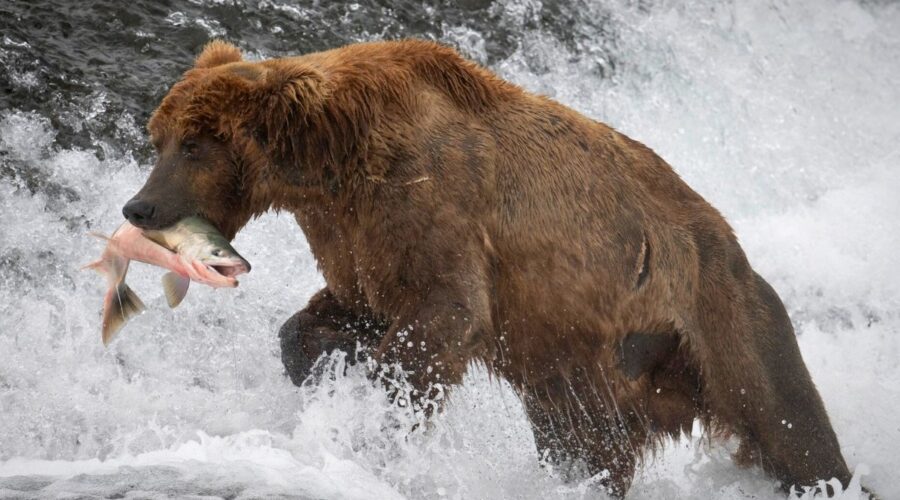
Where to See the Most Bears Catching Salmon
To see the most bears actively catching salmon, head to McNeil River Falls in McNeil River State Game Sanctuary, Alaska. It has the world’s highest concentration of brown bears during salmon runs, with up to 100+ bears per day and 60+ visible at once snatching chum and sockeye at the falls.
However, access is extremely limited since only 185 permits is granted via a lottery system. If you’re looking for a location that’s easier to reach but still offers plenty of opportunities to see bears fishing for salmon, consider these options from the list.
The best time is July to mid-August, peaking in mid-July when salmon are most abundant and bears are hyper-focused on fishing before dispersing.
McNeil River Falls, McNeil River State Game Sanctuary, Alaska
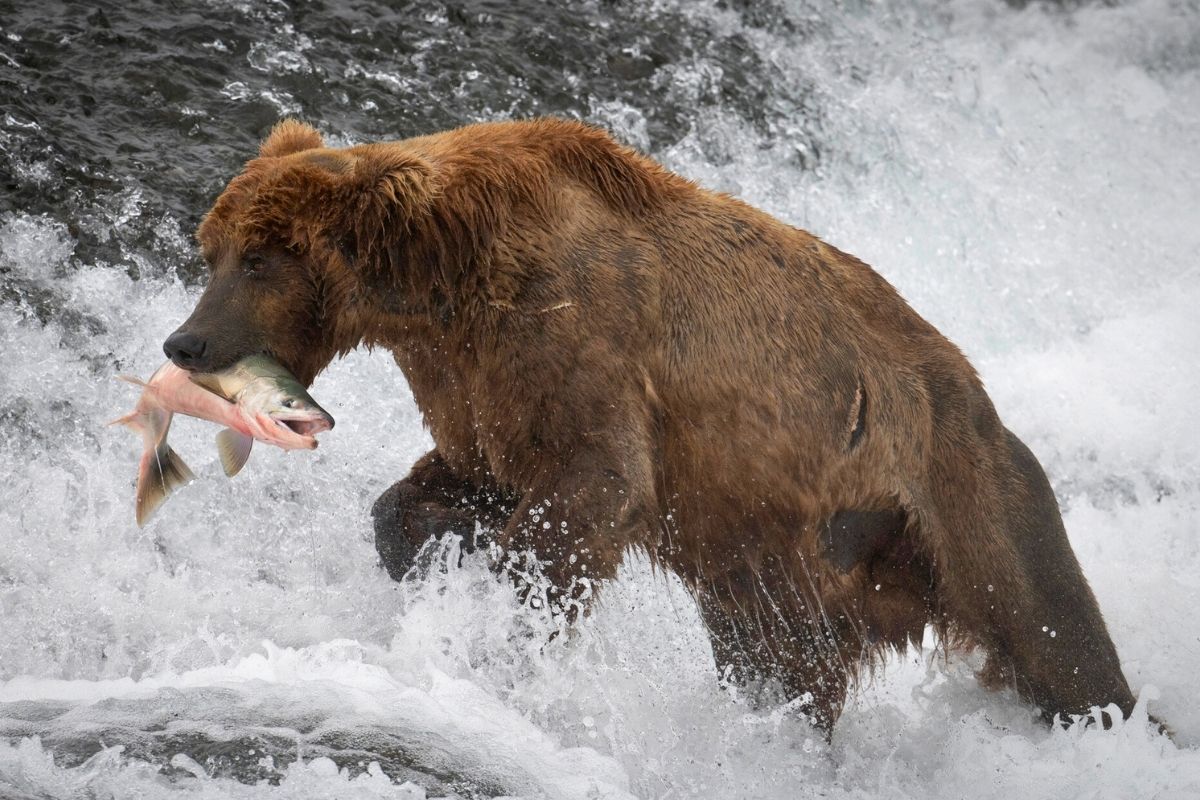
How many bears? McNeil holds the world record for bear density, with more than 100 brown bears sometimes visible in a single day. At the falls, 60 or more can gather during the peak chum and sockeye salmon runs between mid-June and mid-August.
Where can you watch them? Visitor numbers are limited. Only 185 individual permits (+ 57 standby permits) are granted for the whole season. Travellers will view bears from designated areas near the falls.
Is it accessible? No, McNeil is extremely remote. It is only reachable by floatplane from Homer, and access is strictly controlled through a lottery permit system issued by the Alaska Department of Fish and Game.
Brooks Falls, Katmai National Park, Alaska

Brooks Falls is one of the most famous bear-watching spots in the world, with safe platforms overlooking dozens of brown bears fishing for salmon. Between mid-June and early September, 50–70 bears gather here, providing iconic photo opportunities. More accessible than McNeil, visitors can take a floatplane from Anchorage or King Salmon, and lodging is available at Brooks Lodge. Demand is high, so reservations should be made well in advance.
Geographic Harbor, Katmai National Park, Alaska

Geographic Harbor offers a remote and pristine bear-viewing experience along Katmai’s coast. Dozens of bears congregate in coastal streams during the late summer salmon runs, especially in August. With no public facilities, visitors must arrive by boat or floatplane from Kodiak and join guided tours that include boat-based viewing. The reward is a high density of bears in one of Alaska’s most scenic wilderness settings.
Khutzeymateen Grizzly Bear Sanctuary, British Columbia

Known as Canada’s first grizzly sanctuary, Khutzeymateen is home to one of British Columbia’s densest bear populations. Between August and October, 50–60 grizzlies can be seen along rivers and estuaries, with September being peak time. Access is only by boat or floatplane from Prince Rupert, and all visitors must join guided tours. The sanctuary offers structured viewing platforms and eco-friendly lodging, making it ideal for responsible wildlife tourism.
Knight Inlet/Glendale Cove, Great Bear Rainforest, British Columbia

How many bears? During the salmon runs from August 31 through October 15, especially in September, dozens of grizzly and black bears gather along the river mouth. It is one of the most reliable places in Canada to see large concentrations of bears fishing for salmon.
Where can you watch them? Most travelers book multi-day packages with Knight Inlet Lodge. These packages include floatplane transfers, lodging, meals, and guided bear-viewing from elevated platforms. 12 guests can stay on the viewing platform during four different viewing periods.
Is it accessible? Knight Inlet is moderately accessible. Visitors can reach it by floatplane or boat from Campbell River, about an hour from Vancouver.
Anan Wildlife Observatory, Tongass National Forest, Alaska

The Anan Wildlife Observatory combines accessibility with excitement. Located a short floatplane or boat ride from Wrangell or Ketchikan, it limits visitors to 60 per day, ensuring an intimate experience. From mid-July to early October, both brown and black bears gather at Anan Creek to feast on salmon. Elevated boardwalks and platforms provide safe, close-up viewing, with August being the busiest month.
Fish Creek Observation Site, Hyder, Alaska
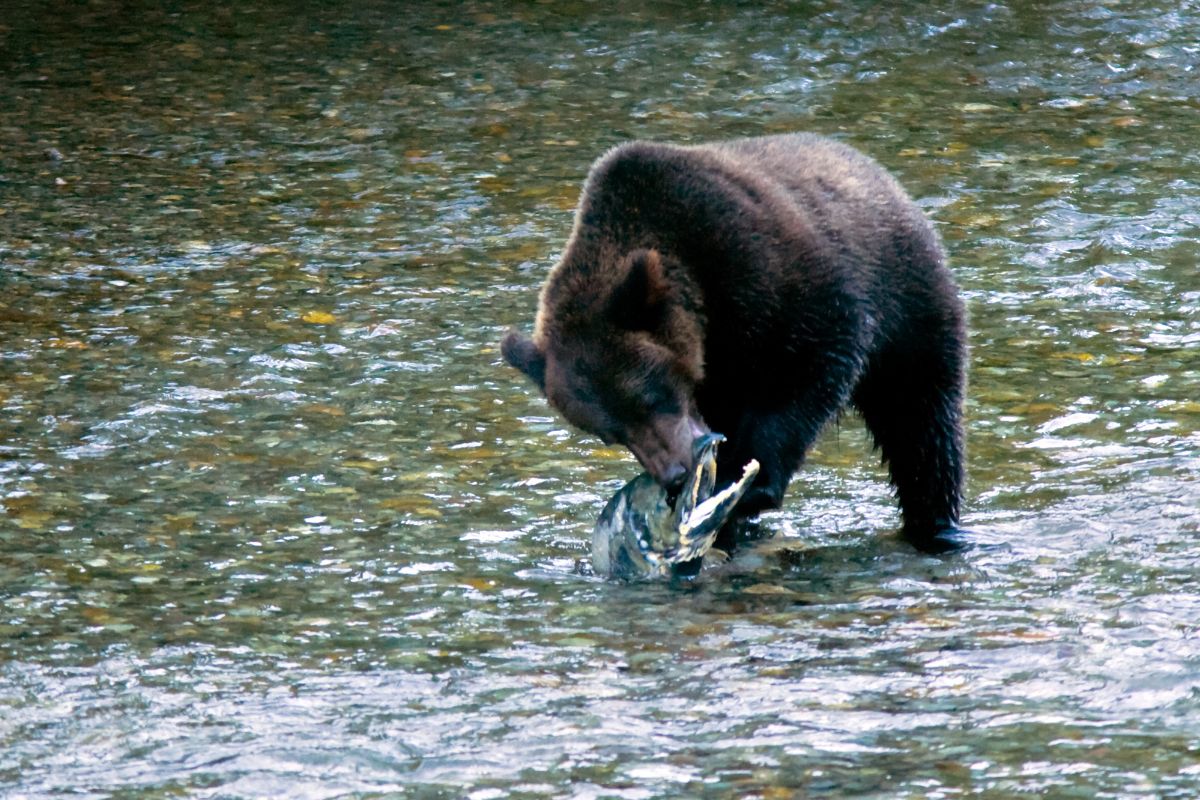
Often called the “budget Brooks Falls,” Fish Creek is the only road-accessible site on this list. Located near the border town of Hyder, it features a Forest Service platform where grizzly and black bears fish for salmon between late July and early September. Access is straightforward by car from Stewart, BC, and no permits are required, making it one of the easiest and most affordable bear-viewing options in North America.
Pack Creek (Staney Creek), Admiralty Island, Alaska

Admiralty Island is known as the “Fortress of the Bears,” and Pack Creek is its most accessible viewing site. From late July to early September, more than 25 brown bears can often be seen at the creek mouth. Visitors need permits (available through recreation.gov), but guided tours from Juneau simplify logistics. Observation towers provide safe vantage points, making Pack Creek an excellent choice for a day trip.
Chinitna Bay, Lake Clark National Park, Alaska

Chinitna Bay offers sweeping views of brown bears in meadows and streams, especially during the July and August salmon runs. Accessible only by floatplane from Anchorage, visitors must join guided tours, but the payoff is large groups of bears in an unspoiled coastal landscape. Day trips are popular, with the best sightings usually at dawn or dusk.
Leavenworth National Fish Hatchery, Washington

For those who don’t want to fly to Alaska, Leavenworth Hatchery in Washington offers a simpler option. Just a two-to-three-hour drive from Seattle, the hatchery trails provide opportunities to see five to ten black bears fishing at Icicle Creek during the fall salmon run. While smaller in scale than Alaska’s hotspots, it’s family-friendly, free to visit, and an excellent introduction to bear watching.
Watching the Most Bears with the Easiest Access
For the best balance of high bear numbers and easy access, choose Fish Creek Observation Site near Hyder, Alaska, in August.
Its unique road access from Stewart, BC (fly to Terrace Regional Airport, then drive 2–3 hours), eliminates the need for costly flights or permits, while offering large gatherings of grizzly and black bears catching salmon.
If you do not want to fly to Alaska, visiting Leavenworth National Fish Hatchery in Washington in September is the easiest. It is only a 2–3-hour drive from Seattle and black bear congregate at Icicle Creek to catch salmon.
More articles about Canada


Emese Maczko is a travel blogger behind Eco Lodges Anywhere. Having explored several destinations around Europe, the US, Indonesia, and Australia, and resided in Germany, the United Kingdom, and Luxembourg, Emese possesses a keen understanding of diverse cultures and an appreciation for the beauty of each destination she visits. She advocates for sustainable travel and ecotourism.