
10 Most Visited National Parks in Canada (2025)
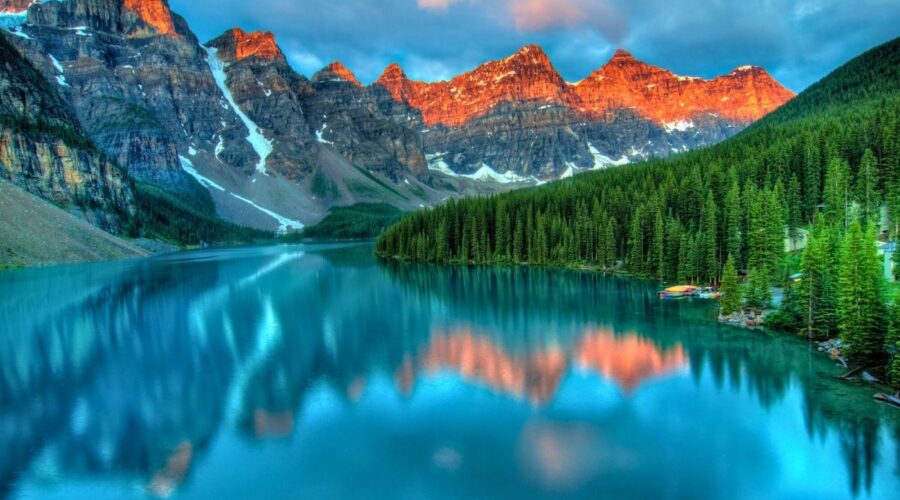
Banff, Pacific Rim and Saguenay–St. Lawrence National Park top the latest list of Canada’s most visited national parks, welcoming millions of travelers each year to the Rockies and the Pacific coast. The wildfire in July 2024 cut Jasper National Park’s visitor numbers by 50%, dropping it to fourth place.
According to visitor statistics published by Parks Canada for the 2023/24 and 2024/25 fiscal years, these are the ten most visited Canadian national parks.
#10 – Bruce Peninsula National Park
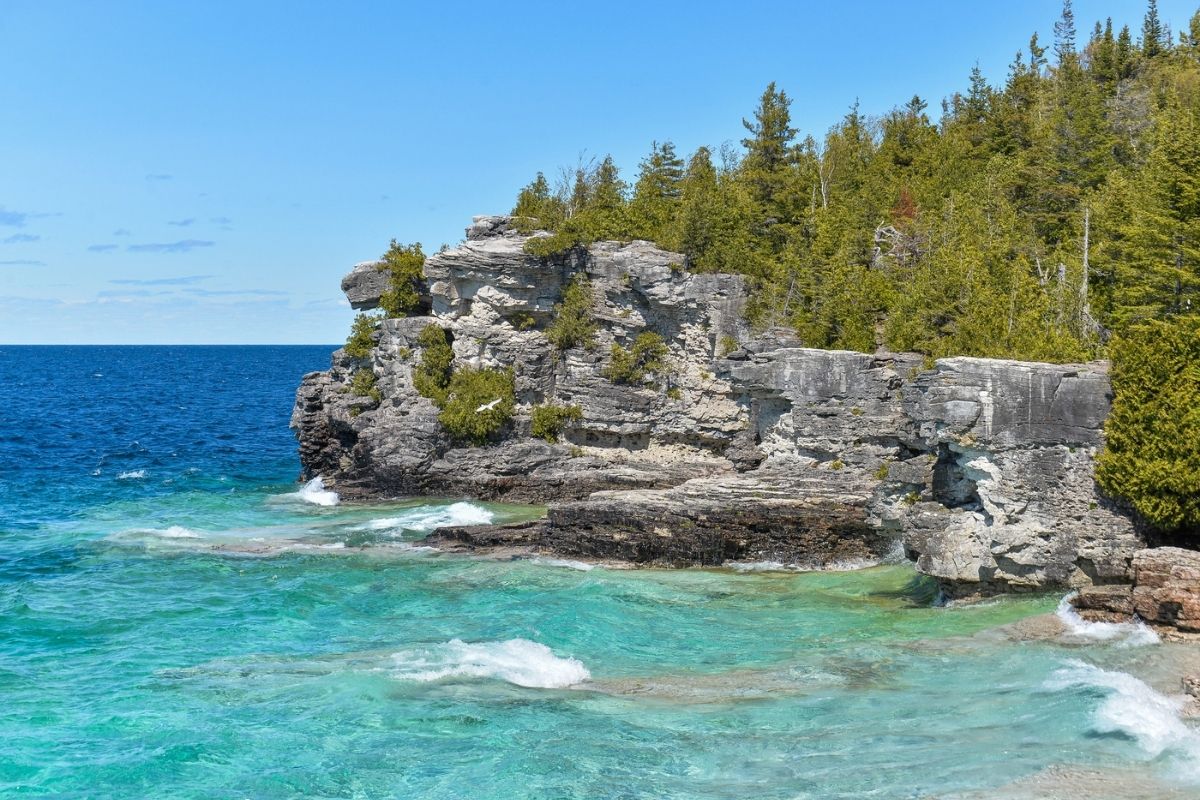
Visitors in 2024/25: 492,024. Compared to 2023/24 (493,866), the difference is -0.4%.
Bruce Peninsula is beloved national park on Ontario’s Lake Huron shore with its wind-sculpted cliffs and turquoise waters. The most popular attraction is the Grotto, a sea cave where visitors can hike, swim, and explore underwater tunnels.
The national park is part of the UNESCO Niagara Escarpment World Biosphere Reserve partly due to being an ecological hotspot for rare plant species that includes over 30 types of orchids.
It is also a designated Dark Sky Preserve, ideal for stargazing.
How to get there? – Bruce Peninsula National Park is primarily reached by car via Highway 6. The Visitor Centre is located near Tobermory, Ontario. There is also a seasonal ferry, connecting Tobermory with Manitoulin Island. Park Bus service is available from downtown Toronto, where a return ticket is costing CA$150 per adult in 2025.
WHERE TO STAY – Search for Ontario eco-lodges nearby.
#9 – Point Pelee National Park
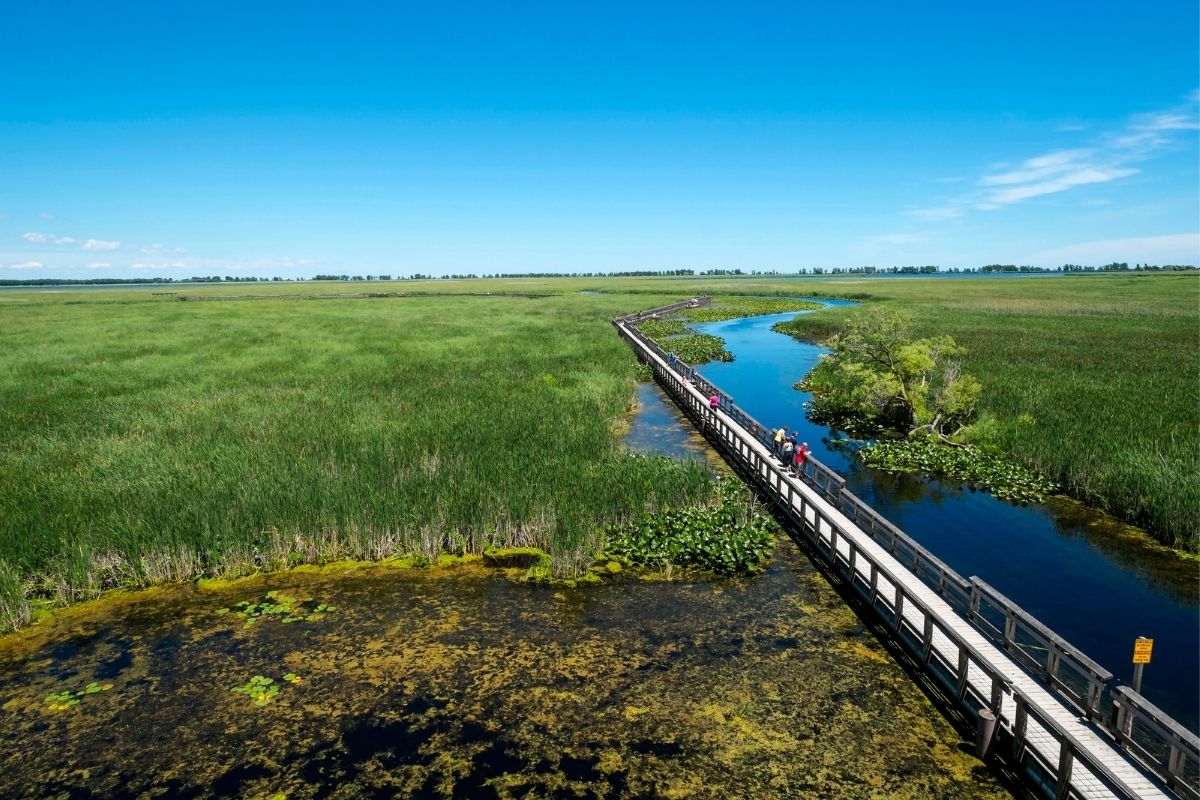
Visitors in 2024/25: 492,041. Compared to 2023/24 (494,037), the difference is -0.4%.
Point Pelee National Park is the southernmost point of mainland Canada and is a biodiversity hotspot with over 390 species of birds. Travelers interested in bird watching visit the park especially during the spring and fall migrations.
The park features the unique Carolinian forest ecosystem, which includes rare plants like the endangered Eastern prickly pear cactus, the only naturally occurring cactus species in Canada.
Another highlight is the large marsh that covers about two-thirds of the park, providing habitat for diverse wildlife and popular for canoeing and kayaking.
Do not miss the Tip Tower, if you get there. It offers panoramic views of the park.
How to get there? – Point Pelee National Park is in Leamington, Essex County, Ontario, about an hour’s drive south of Windsor. There is no direct public transit to the park, but VIA Rail Canada serves Windsor and Chatham stations, and from Windsor, Transit Windsor bus service connects travelers to Leamington.
WHERE TO STAY – Search for Ontario eco-lodges nearby.
#8 – Waterton Lakes National Park
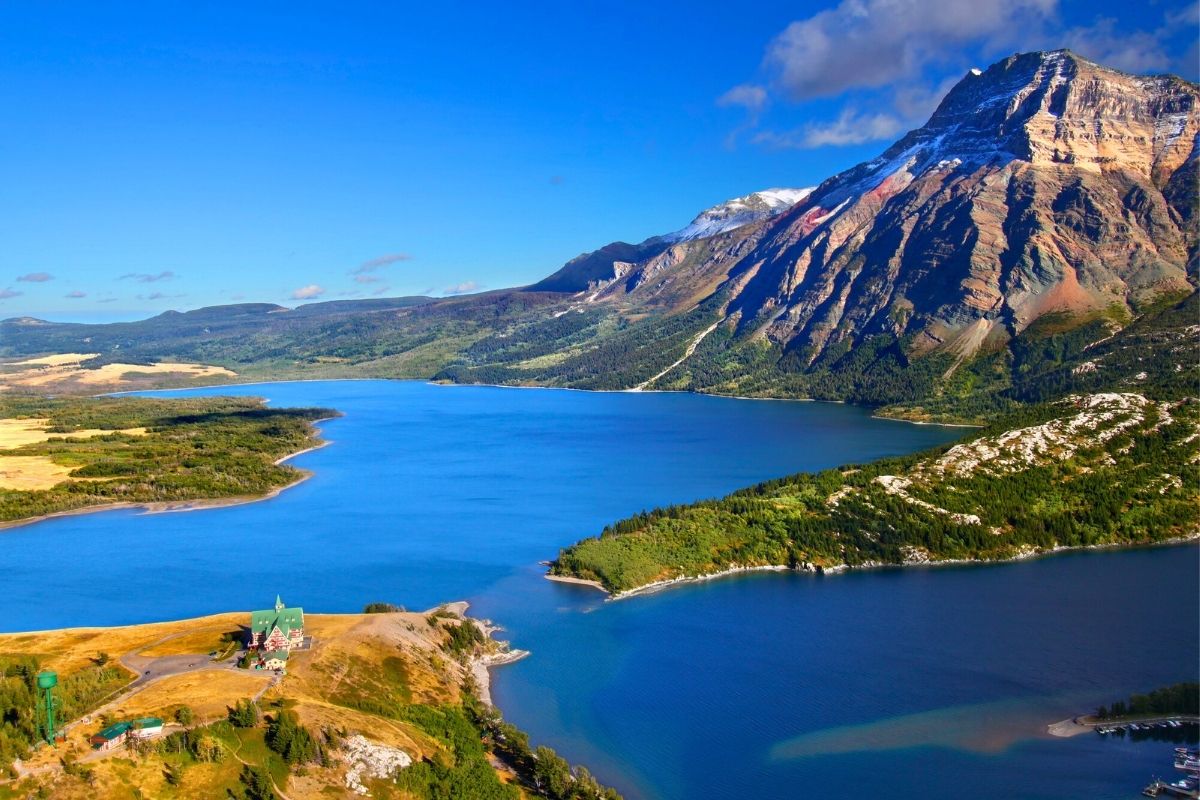
Visitors in 2024/25: 544,602. Compared to 2023/24 (525,971), the difference is +3.5%.
Waterton Lakes National Park merges mountain vistas with turquoise lakes at the border of Alberta, Canada and Montana, United States. It grew in popularity compared to last year, probably thanks to its close proximity to the U.S. border.
Popular attractions include hiking the famous Crypt Lake Trail, scenic drives along the Red Rock Canyon Road, canoeing and kayaking on Cameron Lake, or boat cruises on Upper Waterton Lake.
How to get there? – Waterton Lakes National Park is about a 3-hour drive from Calgary, Alberta. The nearest town is Waterton, where the park’s main entrance and visitor center are located.
However, due to its close proximity to Glacier National Park in Montana, travelers often take the scenic Highway 6 through the Chief Mountain Border Crossing. There are daily shuttle buses from the Crossing to Waterton.
WHERE TO STAY – Search for Alberta eco-lodges nearby.
#7 – Kootenay National Park
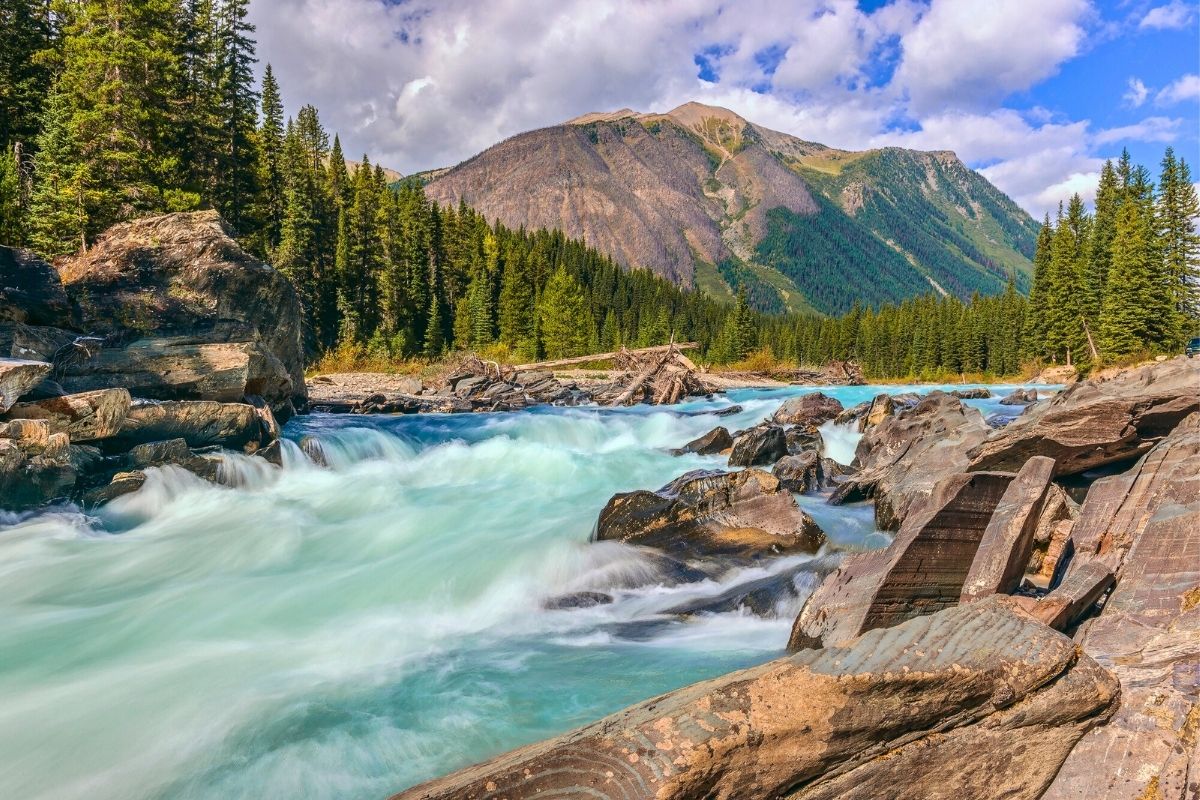
Visitors in 2024/25: 544,770. Compared to 2023/24 (561,167), the difference is -2.9%.
Kootenay National Park in British Columbia offers a stunning natural blend of snow-capped peaks, turquoise rivers, dense forests, and unique geological features, south of Banff National Park.
The park is known for Radium Hot Springs, natural mineral pools perfect for relaxing, and the Paint Pots, iron-rich springs once used by Indigenous peoples to create pigments.
Hikers are going to Marble Canyon, a dramatic limestone gorge carved by Tokumm Creek with deep turquoise pools and towering rock formations, to Stanley Glacier Trail and or to the more challenging Rockwall Trail.
How to get there? – Kootenay National Park is located in southeastern British Columbia along Highway 93 (the Banff-Windermere Highway), approximately 3 hours from Calgary, Alberta. Public transit options are limited.
WHERE TO STAY – Search for eco-lodges in British Columbia nearby.
#6 – Yoho National Park
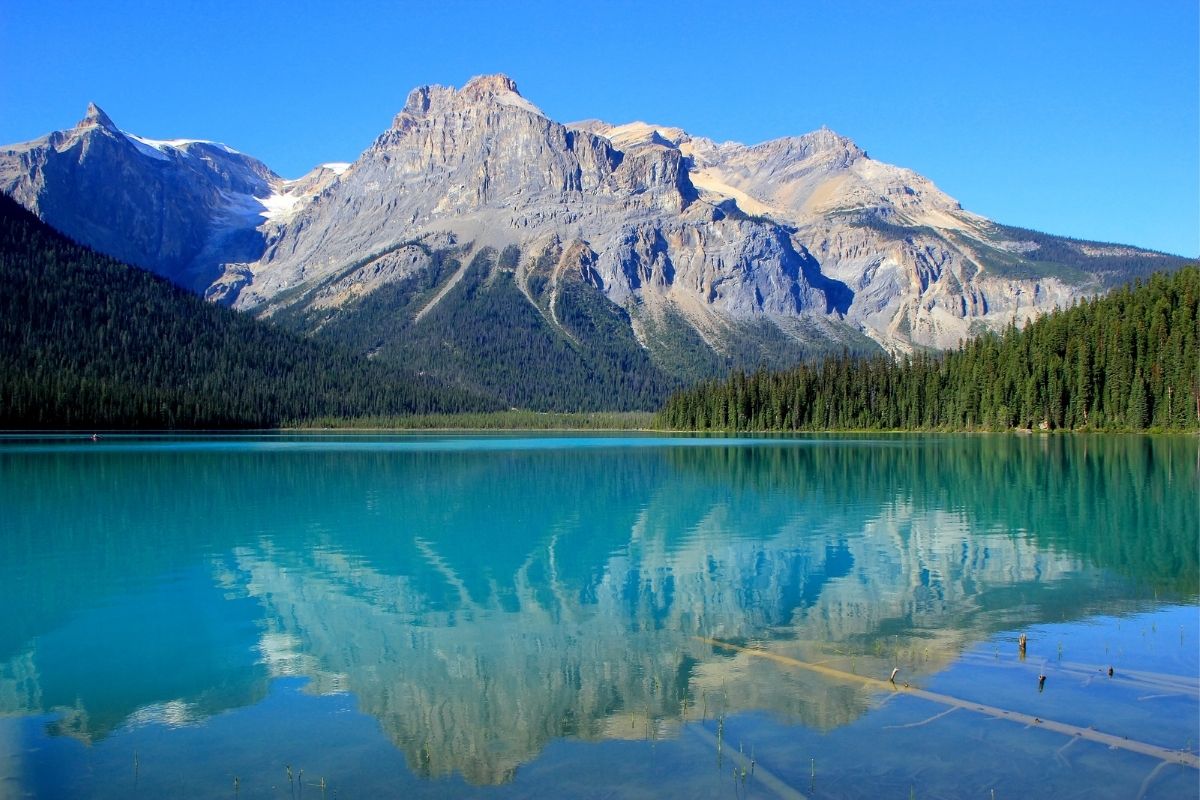
Visitors in 2024/25: 682,659. Compared to 2023/24 (694,867), the difference is -1.8%.
Yoho National Park is a spectacular Canadian Rockies destination, neighbouring Banff National Park from the west.
The park is home to the famous and striking turquoise Emerald Lake and one of Canada’s highest waterfalls, Takakkaw Falls, named from the Cree word for “magnificent.”
The Burgess Shale fossil beds is a UNESCO World Heritage Site since the beds exceptionally preserved Cambrian fossils.
The Spiral Tunnels is an engineering marvel in the railway system that helps trains navigate the mountain grades. Visitors may catch rom the dedicated viewpoints one of the daily 20-30 trains while they go through the tunnels.
How to get there? – Yoho National Park is located in southeastern British Columbia along the Trans-Canada Highway (Highway 1), between Banff and Golden. The nearest town is Field, approx. 3 hours from Calgary, Alberta. Public transportation is limited.
WHERE TO STAY – Search for eco-lodges in British Columbia nearby.
#5 – Mount Revelstoke & Glacier National Parks
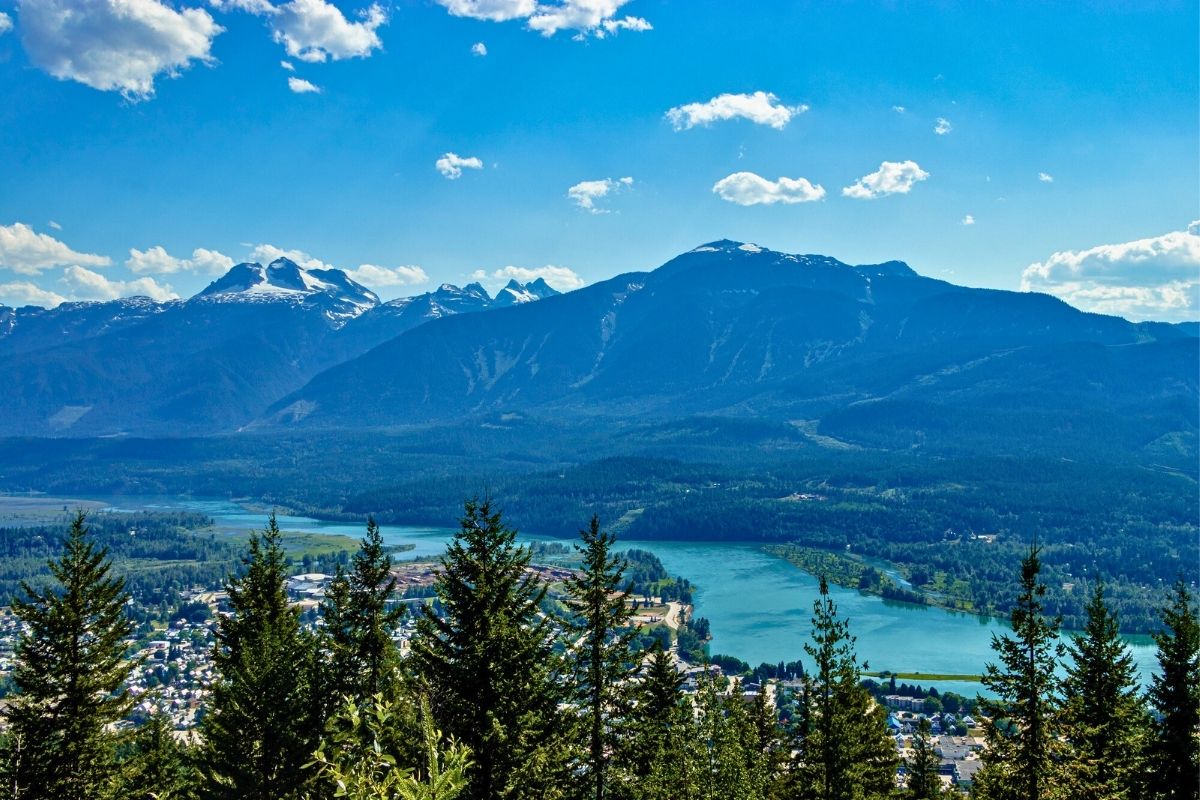
Visitors in 2024/25: 837,761. Compared to 2023/24 (768,430), the difference is +9.0%.
Yes, Canada also has a Glacier National Park, neighbouring Mount Revelstoke National Park in British Columbia. These two parks are bundled together in visitor stats. They are also one of the Canadian national parks that grew in popularity thanks to its close proximity to the U.S. border, notably the Eastport–Kingsgate crossing in Idaho.
The most popular attraction in Mount Revelstoke National Park is Meadows in the Sky Parkway a scenic 16-mile paved road that winds to the mountain summit with stunning viewpoints. Visitors can hike to the historic Fire Lookout built in 1927, walk the Giant Cedars Boardwalk through ancient red cedar forests, or explore the Nels Nelson Historic Area, which highlights Canada’s ski jumping history.
Glacier National Park in British Columbia, Canada, is one of the oldest national parks and is famously called the “Backbone of the World.” It features glaciers, old-growth forests and dramatic peaks such as Mount Wheeler (10,944 ft), Mount Macoun (9,938 ft) and Mount Topham (9,423 ft). The Rogers Pass Discovery Centre is a good starting point for hikes and visitor information.
How to get there? – Both park entrances lie along the Trans-Canada Highway (Highway 1). The nearest major airport is Kelowna International Airport approx. 2.5 hours drive and aCalgary International Airport about 4 hours away.
WHERE TO STAY – Search for eco-lodges in British Columbia nearby.
#4 – Jasper National Park
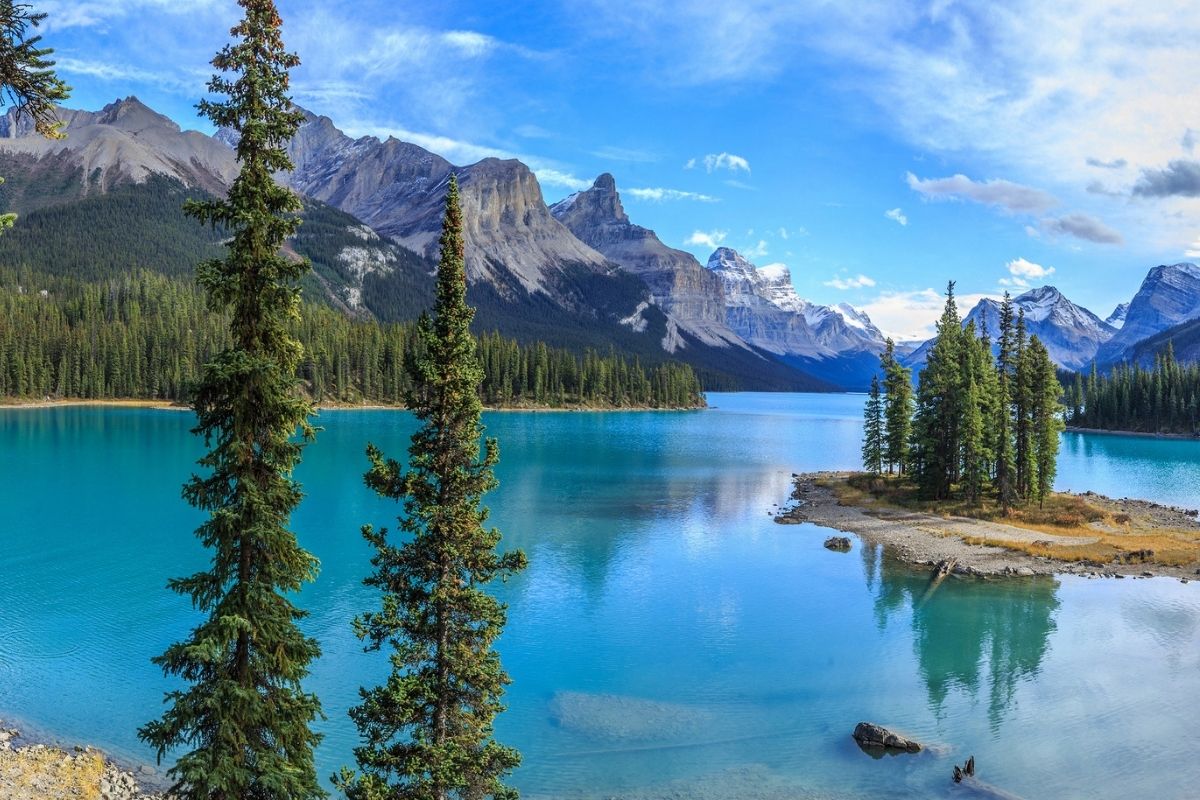
Visitors in 2024/25: 1,142,080. Compared to 2023/24 (2,407,529), the difference is -52.6%.
Jasper National Park was the second busiest national parks in Canada until July 2024 when a devastating wildfire forced closures, evacuations, and damaged infrastructure.
The Icefields Parkway, an over 140 mile-long scenic route is the most popular attraction for road trippers. Hikers and adventure travelers flock to Maligne Canyon, a deep limestone gorge with stunning waterfalls. Please note that parts of it is still closed in 2025 due to maintenance work after the wildfire.
Maligne Lake is the largest lake in the Rockies. Spirit Island in the middle of the lake is one of the most photographed islands in Canada.
How to get there? – Jasper National Park is in Alberta, just north of Banff National Park. It’s almost the same distance from Calgary and Edmonton, with a drive of about four hours from either city. VIA Rail Canada also offers a train route connecting Edmonton and Vancouver with Jasper.
WHERE TO STAY – Search for Alberta eco-lodges nearby.
#3 – Saguenay–St. Lawrence Marine Park
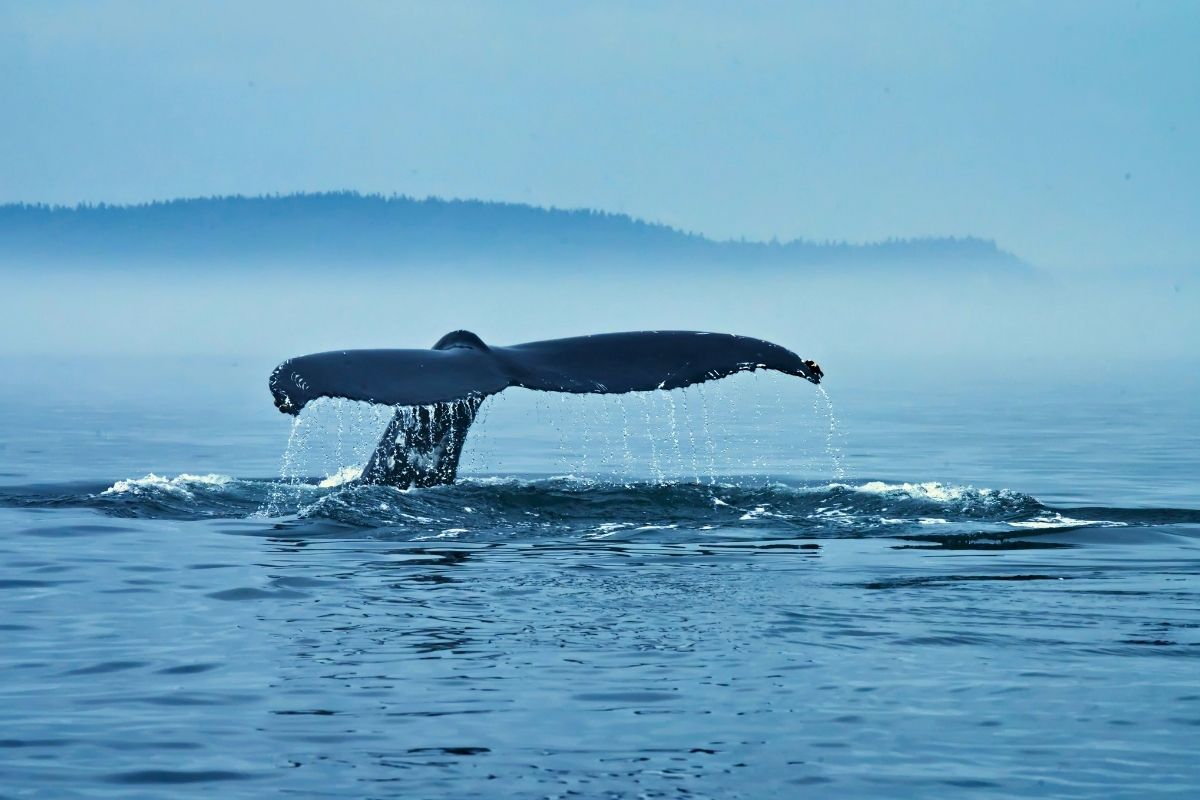
Visitors in 2024/25: 1,158,251. Compared to 2023/24 (1,135,105), the difference is +2.0%.
Saguenay–St. Lawrence Marine Park is a marine protected area in Quebec and the only Canadian national park on the list that is not land-based.
From May until October, a total of 13 species of whales and dolphins will visit the St. Lawrence estuary, making it not only one of the prime whale-watching locations in Canada, but also one of the world’s best whale-watching spots.
Beyond whale watching, visitors can join guided boat tours, go sea kayaking, and scuba diving to explore colorful marine life of over 2,200 species.
How to get there? – From Quebec City, it takes approx. 3 hours to reach one of the gateway towns, Tadoussac, Les Bergeronnes, and Les Escoumins. However, Montreal is a bit further, 5-6 hours away. Regional airports are in Saguenay (Bagotville) and Baie-Comeau. Intercar also operates daily bus service between Quebec City and Saint-Siméon and Saguenay.
WHERE TO STAY – Search for Quebec eco-lodges nearby.
#2 – Pacific Rim National Park Reserve

Visitors in 2024/25: 1,173,986. Compared to 2023/24 (1,105,504), the difference is +6.2%.
Pacific Rim National Park Reserve is located on the west coast of Vancouver Island in British Columbia, Canada. It is divided into three main regions: Long Beach, the Broken Group Islands, and the West Coast Trail.
Long Beach offers visitors a roughly 10 miles of sandy coastline, great for surfing, tidepool exploring, and beachcombing.
The Broken Group Islands, with over 100 islands, are a top kayaking destination with several camping sites on the different islands.
Bear watching is a popular activity in Pacific Rim National Park Reserve, especially near Tofino and Ucluelet since a large population of black bears live there. From mid-April through October guided bear watching tours take visitors to see them along the shorelines of Clayoquot Sound and Barkley Sound.
How to get there? – Tofino Airport is the closest regional airport, approx. 10-15 minute drive from Long Beach. The car ride from Vancouver to Pacific Rim National Park Reserve typically takes about 4.5 to 6 hours. It includes a 1.5-hour long ferry ride from Horseshoe Bay to Nanaimo Departure Bay.
WHERE TO STAY – Search for eco-lodges in British Columbia nearby.
#1 – Banff National Park
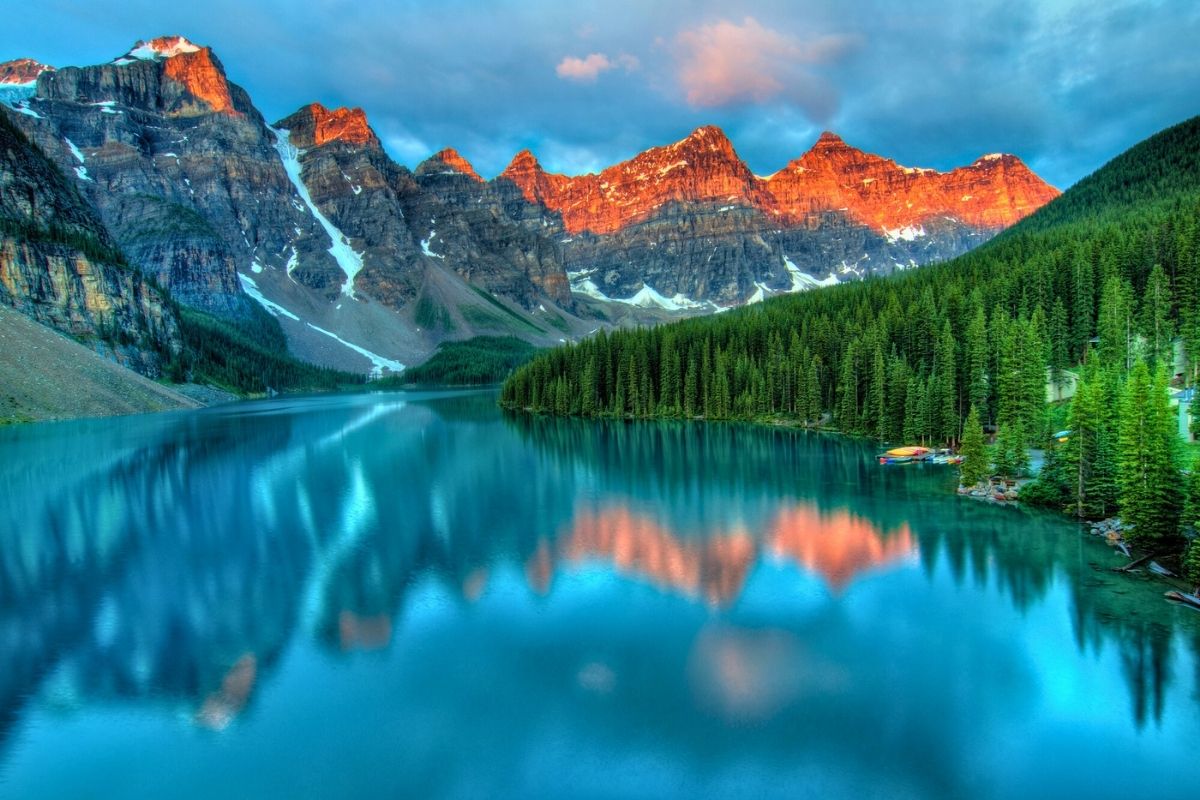
Visitors in 2024/25: 4,230,156. Compared to 2023/24 (4,288,003), the difference is -1.3%.
Banff National Park remains Canada’s premier national park. Despite a modest decline in 2024/25, Banff continues to command the top spot year after year. Banff was also the first national park in Canada, established in 1885.
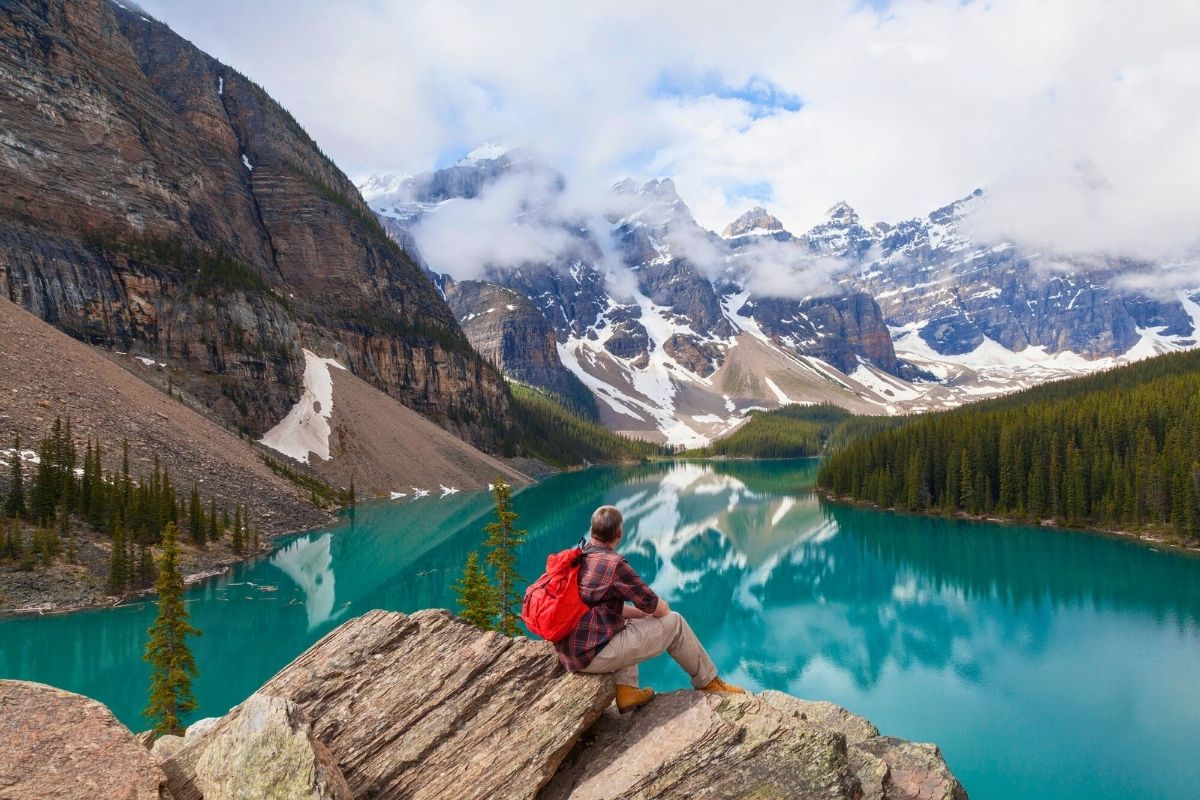
It is part of the Rocky Mountain Parks UNESCO World Heritage Site that includes stunning turquoise lakes like Lake Louise, Moraine Lake, and Peyto Lake, as well as hundreds of glaciers, including Bow and Athabasca glaciers.
But the superlatives don’t end here. The park is also home to Canada’s longest cave, Castleguard Cave, and its gateway town, Banff is the highest in Canada.
How to get there? – Banff National Park is in Alberta, about 1.5 to 2 hours west of Calgary International Airport by car. The park can also be visited by train from Calgary through services like the Rocky Mountaineer. Public buses and shuttles operate seasonally between Calgary and Banff.
WHERE TO STAY – Search for Alberta eco-lodges nearby.
More articles about Canada


Emese Maczko is a travel blogger behind Eco Lodges Anywhere. Having explored several destinations around Europe, the US, Indonesia, and Australia, and resided in Germany, the United Kingdom, and Luxembourg, Emese possesses a keen understanding of diverse cultures and an appreciation for the beauty of each destination she visits. She advocates for sustainable travel and ecotourism.