

All Alaska Airports (2026 Info) + Map
Alaska, the largest and one of the most remote U.S. states, is home to a network of international, regional, and minor commercial airports that play a vital role in connecting its vast wilderness, remote communities, and spectacular landscapes. With limited road infrastructure in many areas, air travel is often the most practical and efficient means of transportation within Alaska.
Alaska has four international airports and fewer than a dozen regional airports offering scheduled commercial flights. Together, they connect the state with the Lower 48 and support travel to national parks, remote lodges, and Native villages across Alaska.
International Airports in Alaska
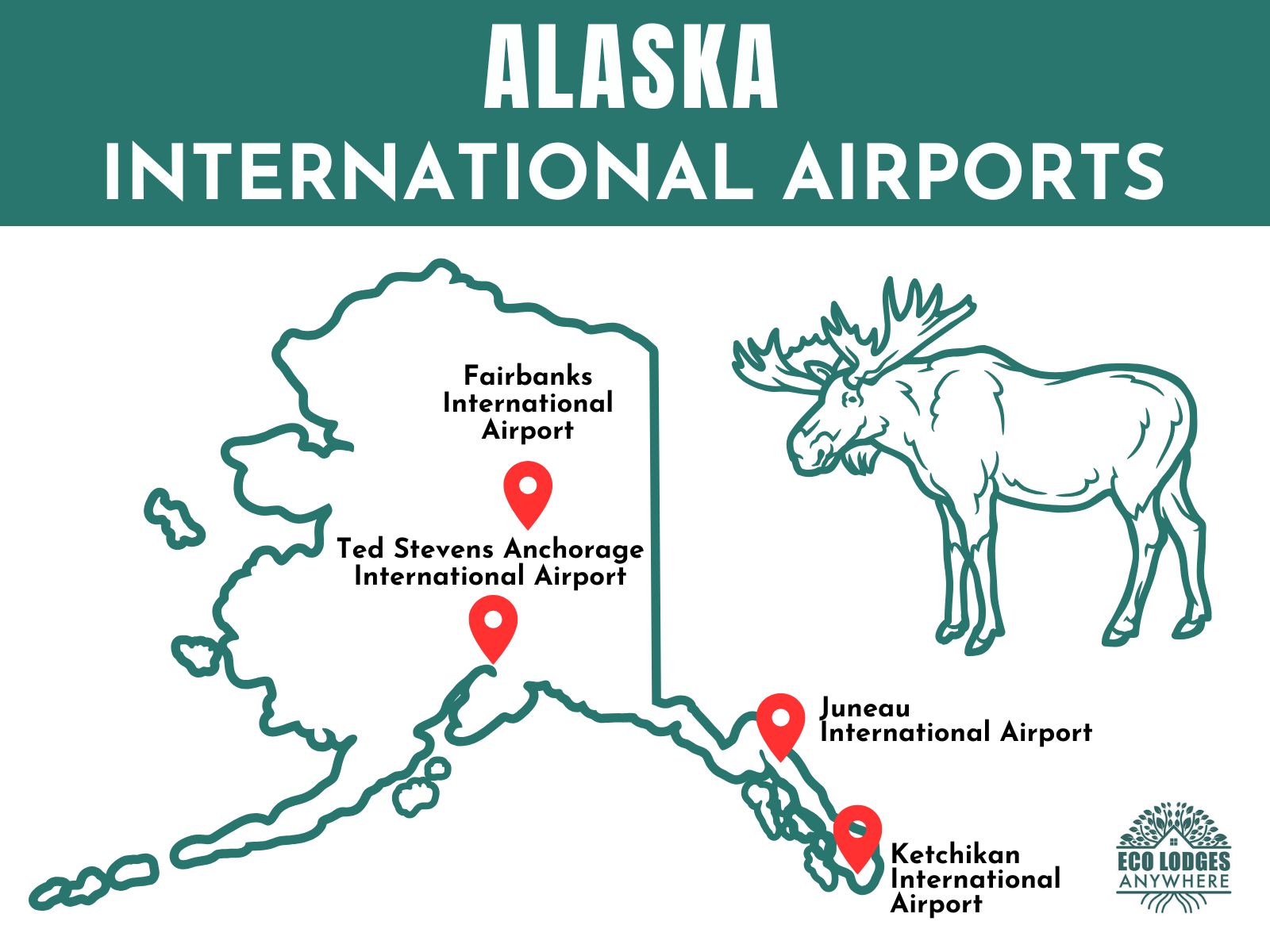
Alaska is served by four major international airports that handle flights from the Lower 48, Asia, and Canada, as well as key domestic connections.
- Ted Stevens Anchorage International Airport (ANC) located in Anchorage, is Alaska’s busiest airport and its main international gateway. It offers direct flights to major U.S. cities such as Seattle, Portland, Los Angeles, Chicago, and Minneapolis, as well as seasonal international routes to Germany (typically Frankfurt) and regular service to Canada. While passenger traffic is significant, ANC is also globally recognized as one of the busiest cargo airports in the world, serving as a strategic hub between Asia and North America. Airlines operating at ANC include Alaska Airlines, Delta, United, American Airlines, and Air Canada. Here is a list of all airlines.
- Fairbanks International Airport (FAI), located about 5 miles from downtown Fairbanks, is one of Alaska’s busiest airports, typically considered second to Anchorage (ANC) in terms of passenger traffic. It primarily handles domestic flights, but also offers seasonal international service, including flights to Germany (Frankfurt) via Condor Airlines, and occasionally Canada. FAI is a key gateway for travelers heading to Denali National Park, exploring Alaska’s interior, or seeking the Aurora Borealis (northern lights) during the winter months. Major airlines serving the airport include Alaska Airlines and Delta Air Lines, with connections to cities such as Seattle, Anchorage, and Minneapolis. Here is a list of all airlines.
- Juneau International Airport (JNU) serves Alaska’s capital city and is located about 8 miles from downtown Juneau. Despite the “international” in its name, JNU primarily handles domestic flights, with the most common routes connecting to Seattle, Anchorage, and other regional Alaskan communities. Alaska Airlines operates most of the commercial traffic at JNU, offering year-round service and seasonal connections to smaller Southeast Alaska towns through its own flights and codeshares with Ravn Alaska or regional partners.
- Ketchikan International Airport (KTN) is located on Gravina Island, just west of downtown Ketchikan, and is accessible only by passenger and vehicle ferry. Despite its name, KTN primarily handles domestic commercial flights, with frequent service to Seattle, Anchorage, and other Southeast Alaska communities. Alaska Airlines is the main carrier, offering multiple daily flights, especially to Seattle. KTN plays a critical role in connecting southern Southeast Alaska to the rest of the state and the U.S. mainland.
Regional Airports in Alaska
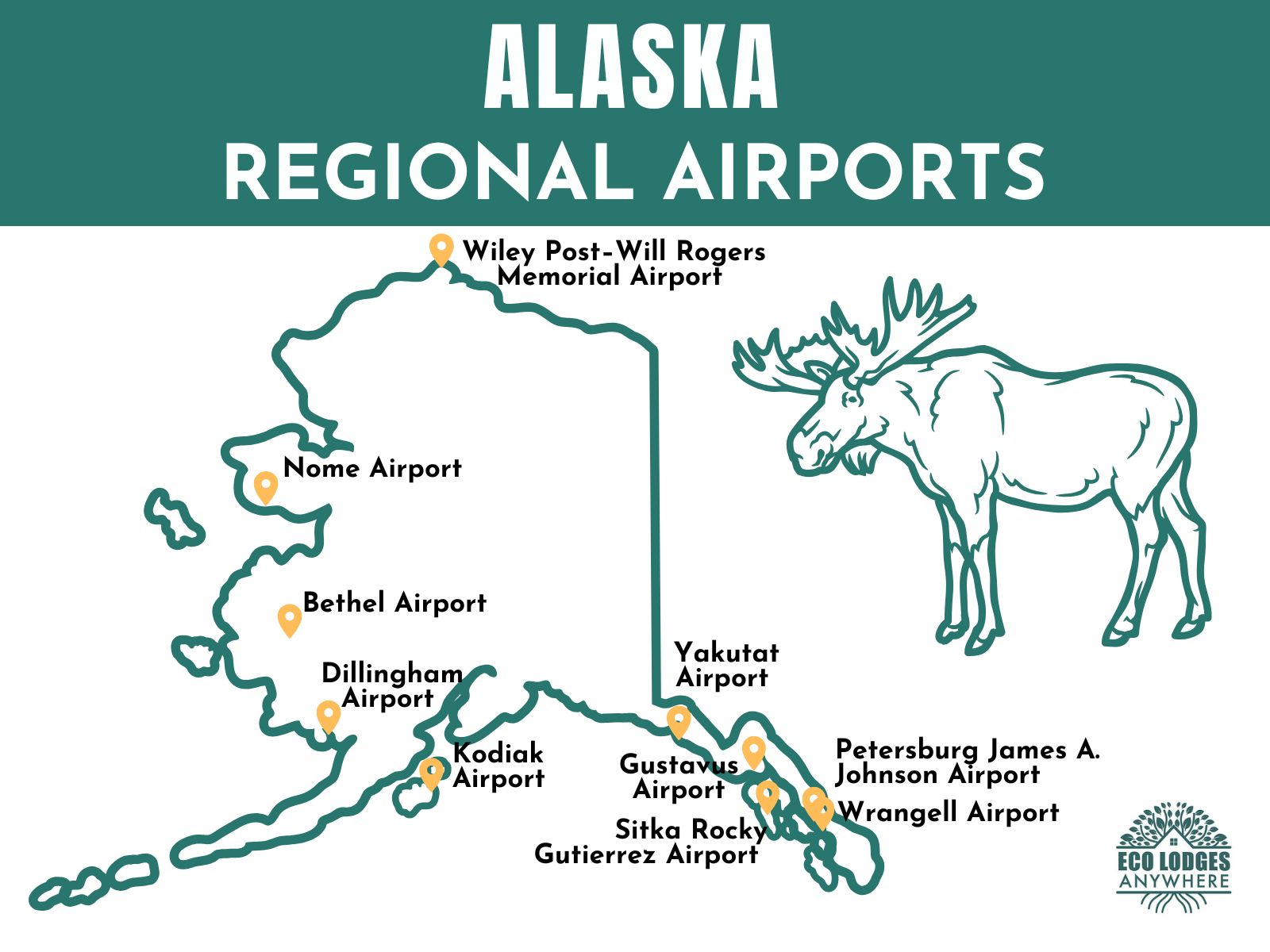
Beyond the international hubs, Alaska has several regional airports that connect remote communities and tourist destinations to Anchorage, Fairbanks, and each other. These airports often accommodate small aircraft and have limited facilities, but they are essential to daily life in Alaska.
- Sitka Rocky Gutierrez Airport (SIT) serves the city of Sitka, Alaska, and is located on Japonski Island, just a short drive across the O’Connell Bridge from downtown. The airport primarily handles flights to Seattle, Juneau, and other Alaskan communities. Alaska Airlines is the main commercial carrier, operating regular service with Boeing 737s and smaller aircraft as conditions require. Due to the short runway and challenging weather conditions, approaches and landings at SIT are known for being particularly scenic—but also technically demanding.
- Bethel Airport (BET) is one of the busiest regional airports in Western Alaska, located about 4 miles from the city center. It serves as a critical hub for air travel to remote communities in the Yukon-Kuskokwim Delta, where road access is extremely limited. Alaska Airlines operates regular service to Anchorage, while regional carriers like Grant Aviation and Ravn Alaska connect Bethel with surrounding villages.
- Nome Airport (OME) is located about 2 miles from downtown Nome and serves as a vital regional hub for Western Alaska. It offers regular flights to Anchorage as well as air service to surrounding remote communities. Alaska Airlines operates scheduled commercial flights to Anchorage, while regional carriers such as Bering Air, Ravn Alaska, and Ryan Air provide essential connectivity to nearby villages for passengers, freight, and mail delivery.
- Dillingham Airport (DLG) located in southwestern Alaska, serves as a vital transportation hub for the commercial fishing industry and seasonal tourism in the Bristol Bay region. It provides regular flights to Anchorage, primarily operated by Alaska Airlines and regional carriers. The airport is essential for transporting people, seafood, and supplies in and out of this remote part of the state.
- Kodiak Airport (ADQ) is located about 5 miles southwest of downtown Kodiak on Kodiak Island. It offers regular commercial service to Anchorage, primarily operated by Alaska Airlines. As one of the few transport hubs on the island, the airport plays a critical role in connecting Kodiak’s remote community to mainland Alaska.
- Wiley Post–Will Rogers Memorial Airport (BRW) in Utqiaġvik (formerly known as Barrow) is the northernmost airport in the United States. It provides regular commercial service connecting Utqiaġvik to Anchorage and other Arctic Alaska communities.
- Petersburg James A. Johnson Airport (PSG) is a small regional airport serving Petersburg, Alaska. It offers commercial flights primarily to Juneau and other Southeast Alaska destinations, helping connect this remote island community to the broader region.
- Wrangell Airport (WRG) is a small regional airport serving Wrangell, Alaska. It offers commercial flights primarily to Juneau, Ketchikan, and other communities in Southeast Alaska, making it an important link for regional travel.
- Gustavus Airport (GST) is the primary gateway to Glacier Bay National Park, located about 10 miles from the park entrance. It offers regular flights to Juneau and seasonal service to Anchorage, mainly operated by Alaska Airlines and regional carriers.
- Yakutat Airport (YAK) located on the Gulf of Alaska, serves both passenger and cargo flights. It provides regular service to Anchorage and Juneau, primarily operated by Alaska Airlines.
Minor Commercial Airports in Alaska
Many smaller communities and Native villages in Alaska have airports that support commercial service from regional carriers such as Ravn Alaska, Grant Aviation, and Alaska Seaplanes. Some of these airports include:
- Haines Airport (HNS)
- Cordova Municipal Airport (CDV)
- Unalaska Airport (DUT)
- King Salmon Airport (AKN)
- Deadhorse/Prudhoe Bay Airport (SCC)
- St. Mary’s Airport (KSM)
- McGrath Airport (MCG)
- Aniak Airport (ANI)
These airports may not have daily service but are lifelines for essential supplies, medical care, and community connectivity.
Airlines and Destinations

Most international and domestic travelers arrive via Ted Stevens Anchorage International Airport (ANC), Alaska’s largest airport. As of 2026, here are the key airlines and destinations:
- Alaska Airlines – Seattle, Los Angeles, Portland, Fairbanks, Juneau, Nome, Bethel and other in-state destinations
- Delta Air Lines – Seattle, Minneapolis, Atlanta (seasonal)
- United Airlines – Denver, Chicago, San Francisco
- American Airlines – Dallas/Fort Worth, Phoenix
- Air Canada – Vancouver (seasonal)
- Icelandair – Reykjavik (seasonal)
- Ravn Alaska – Regional destinations throughout the state
- Grant Aviation, Bering Air, Yute Air – Provide essential air service to remote villages and rural communities
ANC connects Alaska to over 30 nonstop destinations across North America, and seasonally to Europe, and plays a crucial role in both passenger and cargo traffic.
Which Airlines Are Flying Within Alaska?
- Alaska Airlines: The largest carrier in Alaska, offering regular flights to major island destinations including Kodiak, Sitka, Ketchikan, Petersburg, and Wrangell. Known for reliable year-round service and connections to Anchorage and Seattle.
- Ravn Alaska: Operates regional flights to smaller island communities and remote hubs, especially in Southwest and Western Alaska. Key for accessing areas like Dutch Harbor (Unalaska) and St. Paul Island.
- Grant Aviation: Provides essential inter-island and village service, mainly in the Yukon-Kuskokwim Delta and Aleutian regions, including hubs like Bethel and King Salmon.
- Alaska Seaplanes: Specializes in Southeast Alaska routes, flying to places like Angoon, Hoonah, and Pelican. Known for serving communities without road access using small planes.
- Bering Air & Island Air Express: Offer regional flights between remote island villages and hub airports, playing a key role in cargo, mail, and passenger service.
Helicopter service in Alaska is generally limited to charters, medevac, or sightseeing tours rather than scheduled inter-island travel. Most sustainable and dependable inter-island transport is by small regional aircraft, vital for Alaska’s vast and rugged geography.
Air Travel Tips for Alaska
Alaska’s airports are vital to the state’s connectivity, especially for remote communities. Ted Stevens Anchorage International Airport is the main gateway for travelers flying in from the Lower 48 or abroad. For exploring remote towns or natural parks, regional airports like Bethel, Kodiak, and Sitka provide critical access.
Weather can affect travel year-round, so plan for potential delays, especially in winter. Renting a car in larger cities like Anchorage and Fairbanks is the best way to explore surrounding areas, while smaller destinations often rely on air taxis, ferries, or charter flights for further travel.
Whether you’re heading to Denali National Park, coastal fjords, or Arctic tundra, Alaska’s commercial airports make the journey possible—no matter how remote the destination.
More articles about Alaska




Emese Maczko is a travel blogger behind Eco Lodges Anywhere. Having explored several destinations around Europe, the US, Indonesia, and Australia, and resided in Germany, the United Kingdom, and Luxembourg, Emese possesses a keen understanding of diverse cultures and an appreciation for the beauty of each destination she visits. She advocates for sustainable travel and ecotourism.