

Costa Rica Reopens Accommodations at UNESCO Heritage Location Just in Time to Enjoy Less Crowds and Lower Costs
On March 13, 2024, Guanacaste Conservation Area (GCA) reopened the camping area near Playa Naranjo (Orange Beach) to visitors.
Playa Naranjo is in Santa Rosa National Park. Part of an impressive 147,000-hectare conservation area in Costa Rica’s northwest, it’s recognized as a UNESCO World Heritage Sites. It aims to offer a place where tourists can disconnect from modernity and connect with nature in a protected wild area.
Although the phrase “hidden gem” is often overused, how else could one describe a National Park overflowing with attractions, but only saw 33,184 registered visitors in 2023?
The best time to visit Costa Rica can vary based on region and climate. While the peak season winds down in April in most parts of Costa Rica, the northern areas usually stay dry until the end of May.
Claudia Silva, President of Ruta Norte, a tourism initiative covering four northern border cantons in Costa Rica, and the General Manager at Origins Lodge, explains that the dry season up North begins with the blooming of golden trumpet trees, Cortez Amarillo in Spanish.
This year, the yellow flowers started appearing in mid-February, much later than in the South, where the dry season began mid-December. We usually enjoy good weather, even in May.
According to the Costa Rican Tourism Institute, 2023 saw 2,751,134 visitors to Costa Rica. 1,473,620 of those came from the United States.
Yet, fewer than two percent of those visitors explored Santa Rosa National Park. The park is a virtually untouched oasis for those looking to escape the crowds and discover one of Costa Rica’s hidden treasures.

Finding Adventure and Nature at Playa Naranjo and Beyond
Spanning nearly 200 square miles, sprawling Santa Rosa National Park offers countless sites and areas to explore.
Surfers likely already know of Playa Naranjo and its renowned Witch’s Rock, or Roca Bruja, thanks to its mention in 1994 surf documentary Endless Summer II. When, however, is the optimal time to catch larger swells? Playa Naranjo Surf Forecast recommends the summer months, namely July.
Playa Nancite is one of Costa Rica’s two unique places for olive ridley sea turtle migration (in Spanish arribadas). Its modest 0.6 miles bear witness to thousands of turtles laying eggs en masse. Each season, the beach hosts three to four arribadas, resulting in around 70,000 nests and the birth of about 3 million hatchlings annually.
The Murciélago Islands, or Bat Islands, comprise five islands and 10 islets, all a haven for endangered bull sharks and oceanic manta rays. Menacing bull sharks can grow up to 10 feet long, so diving is only recommended for those with experience.
Santa Elena Bay became a Marine Protected Area in 2018. The closest community is Cuajiniquil, a small fishing village that offers scuba diving and snorkeling tours in the Bay and kayaking in the nearby mangrove forests.
One of the Bay’s most breathtaking spectacles is the jumping of devil rays. From December to February, groups of up to 30 stingrays leap together, showing their superb acrobatic skills.
The Santa Elena Peninsula is also a whale-watching hot spot. According to the International Whaling Commission, humpback whales move to the Bay to mate and give birth to the next generation between July and November.

In addition to its natural splendor, the National Park also offers historical attractions. The Historical Museum at La Casona displays artifacts and recounts stories from Costa Rica’s battles.
Past the Boundaries of Santa Rosa National Park
Travelers who venture beyond Santa Rosa National Park can explore Guanacaste National Park, Rincón de la Vieja National Park, Horizontes Forestry Station and Bahía Junquillal Wildlife Refuge, all part of GCA.
GCA estimates that its area is home to 65% of Costa Rican species, a remarkable 2.6% of all global biodiversity.
To put those numbers in perspective, GCA estimates that there are 7,000 plants, 900 vertebrate species, more than 40 bat species, 600 bird species, countless reptiles, amphibians, and sea turtles, 20,000 species of beetles, 13,000 species of ants, bees, and wasps and 8,000 species of butterflies and moths.
Apart from the diverse flora and fauna, Rincón de la Vieja National Park is also home to at least nine volcanic craters and 32 rivers, which have dotted the region with volcanic mud pits, steaming fumaroles, natural hot springs and several waterfalls.
Ruta Norte — Exploring Four Border Cantons
The North Route (in Spanish Ruta Norte) is a tourism initiative created by seven tourism chambers, which today make up “La Federacion Ruta Norte.”
Ms. Silva, the initiative’s President, recalled the cooperation that came to life at the end of the pandemic to help rural tourism, family-owned businesses and micro-entrepreneurs in the four border cantons of La Cruz (home of Santa Rosa National Park), Upala, Guatuso and Los Chiles.
At the end of 2022, these communities united, as the nearly 400-square-mile corridor along the Nicaraguan border represents what is affectionately called “Unknown Costa Rica” (in Spanish, Costa Rica Desconocida).
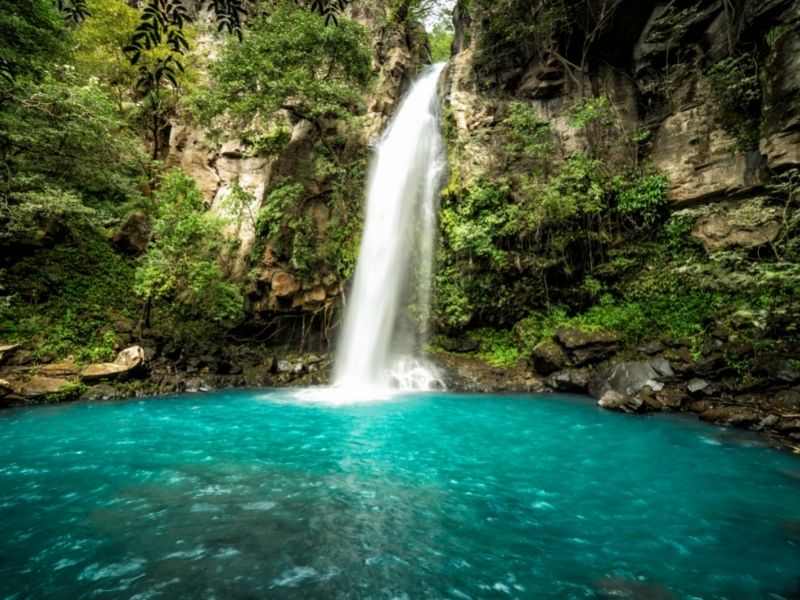
The cantons of Upala and Guatuso share Tenorio National Park. It features a cloud forest, temperate climate and striking scenery, like the Rio Celeste waterfall and its fountain of fantastical turquoise water. These sought-after water rapids are ideal for rafting, tubing and canyoning, among other adventurous aquatic activities.
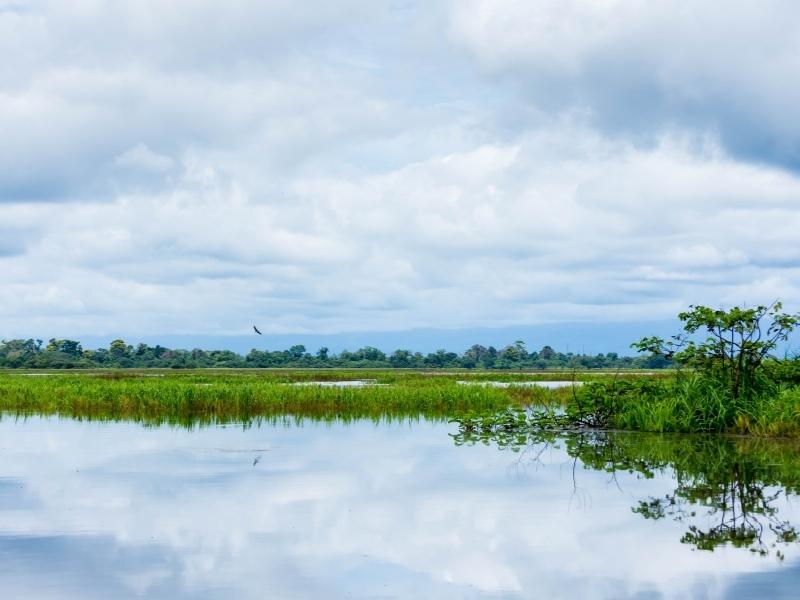
Los Chiles is the gateway to Cano Negro Wildlife Refuge, a wetland formed by the Rio Frío. Here, local guides have identified nearly 400 native and migratory bird species, comprising approximately 40% of all Costa Rican avian species. In addition to feathery friends, the biodiverse area boasts other wildlife, including caimans, iguanas, monkeys, jaguars and fish.
Claudia Silva, President of Ruta Norte and General Manager of Origins Lodge, adds, “These regions share a unified business vision and a genuine enthusiasm for wildlife conservation, and are ready to unveil the unknown wonders of Costa Rica to the world.” Silva also believes that attracting hundreds of tourists to Ruta Norte will benefit more than 400 micro-entrepreneurial businesses and more than 2,000 direct and indirect employees in the area.
This article was originally published on Media Decision (but written by me).





Emese Maczko is a travel blogger behind Eco Lodges Anywhere. Having explored several destinations around Europe, the US, Indonesia, and Australia, and resided in Germany, the United Kingdom, and Luxembourg, Emese possesses a keen understanding of diverse cultures and an appreciation for the beauty of each destination she visits. She advocates for sustainable travel and ecotourism.